The History Behind Migratory Beekeeping
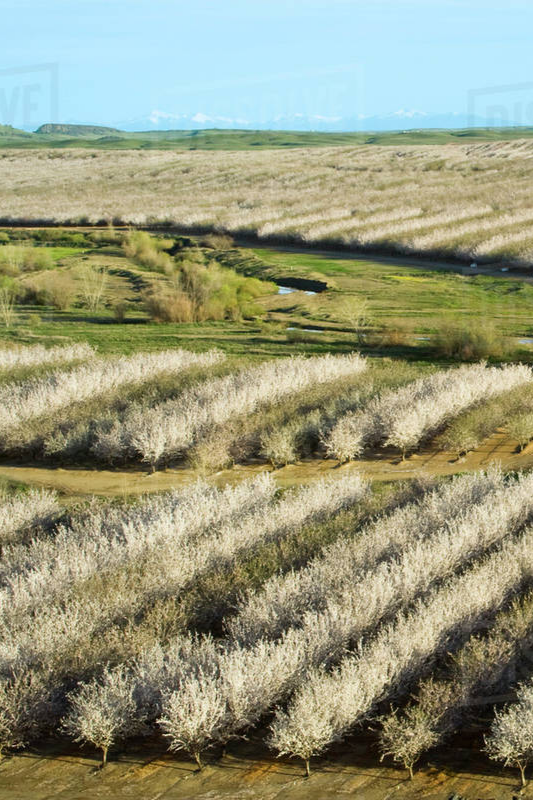
Migratory Beekeepers haul their apiaries from all over the country to the Central Valley of California to pollinate mono-crop fields. After the bloom cycle in a mono-crop field, there is no food for the bees to survive. Consequently, bee colonies need to be immediately moved again and again. Agricultural mono-cropping gave birth to migratory beekeeping.
Migratory beekeeping is at the heart of the honeybee’s deteriorating health and genetics. Over 50% of commercial beekeepers’ hives died over the 2022-23 winter. The stress associated with moving 90% of all the USA bee colonies crammed into the Imperial Valley of California is significant. The journey weakens the bees’ immune systems and disease susceptibility. The annual almond pollination season is a super spreader disease event for most of our domestic honeybees.
Migratory apiaries are multiple times more expensive per hive than permanent apiaries, and their death rate is over double that of permanent apiaries. Mono-cropping and migratory beekeeping persist today because they evolved from the needs of mono-crop farming.
The Bee Bank’s goals are to change the above paradigm by promoting companion plantings, breeding feral bees, and minimizing medications with its members.
Companion Planting
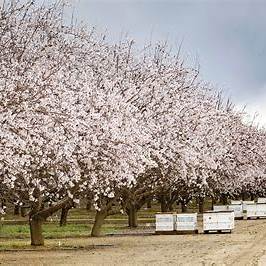
The Bee Bank encourages farmers to adopt companion planting. The benefits are compelling from the reduced cost of commercial fertilizers, benefit from reduced evaporative water loss, and permanent healthy apiaries. Companion planting makes possible the establishment of permanent apiaries. Beekeepers also benefit from permanent apiaries by avoiding a long list of beekeeper costs, including but not limited to loading, unloading, hauling, handling, placing, feeding, and medicating beekeeper’s colonies and the cost to produce and replace dead colonies.
Best Management Practices
A Bee Bank member agrees to practice the bee management program outlined in the membership agreement.
The Bee Bank believes the solution is environment and nutrition, not medication. The beehive design has not changed in centuries. It is precisely like modern-day hives invented in the 17th century. It was designed for humans, not bees. We believe a hive should be created with the bees in mind rather than human convenience.
For these reasons, we have adopted the Taj Hive for Langstroth-type hives and the “Hilton” model for the Layen horizontal specifications. Research confirms that bees are healthier, experience higher survival rates, and produce more honey when commercial hive designs mimic the insulation profile of tree hollows.
Bees require substantial energy to keep hives warm during the winter and cool in the summer. Tree hollows often have several feet of wood above the hallow and half a foot or more of organic material on the side and floor for insulation. This environment produces a specific R-rating profile. It has a substantial R-rating on the sides and floor and a higher R-rating on the ceiling [R 26]. This prevents ceiling dew points, keeps water from dripping onto bees, and provides a stable thermal environment for the bees. Creating hives from commercial lumber with dimensional wood 3 feet thick at the top and one foot wide on the sides is impractical. The hive would be too heavy and too expensive.
CaMar hive criteria [patent pending], the Taj and Hilton hives, including the “Hilton Hive.” These hive systems are the first in the world engineered with a progressive R-rated hive body that mimics the hollows of trees.
Through the genius of Stephen Casey, [the CA in CaMar], these hives are made from a proprietary lightweight composite body that encapsulates progressive engineered insulation material yet is rugged and durable in the field. The R-rating graduates down from the top of the hive to the bottom, managing dew point control and temperature stabilization. With the Hilton hive, Bee Bank members can expect more honey production, a lower hive death rate, and healthier bees.
Finally, there is a hive built for both the bees and humans.
Combining the Taj and the Hilton hive with special financing makes it attractive to transition from traditional apiary animal husbandry practices to natural beekeeping practices by Bee Bank members.